

Scrum Aspects
Overview
The five Scrum aspects define how a project is structured, validated, managed, and refined - from the first Sprint through final delivery.
5
Core Aspects
3
Scrum Roles
100%
SBOK Aligned
∞
Adaptability
Five areas. One cohesive
delivery framework.
Scrum aspects are the critical areas that must be actively managed across every project - from team roles and responsibilities to risk identification and response.
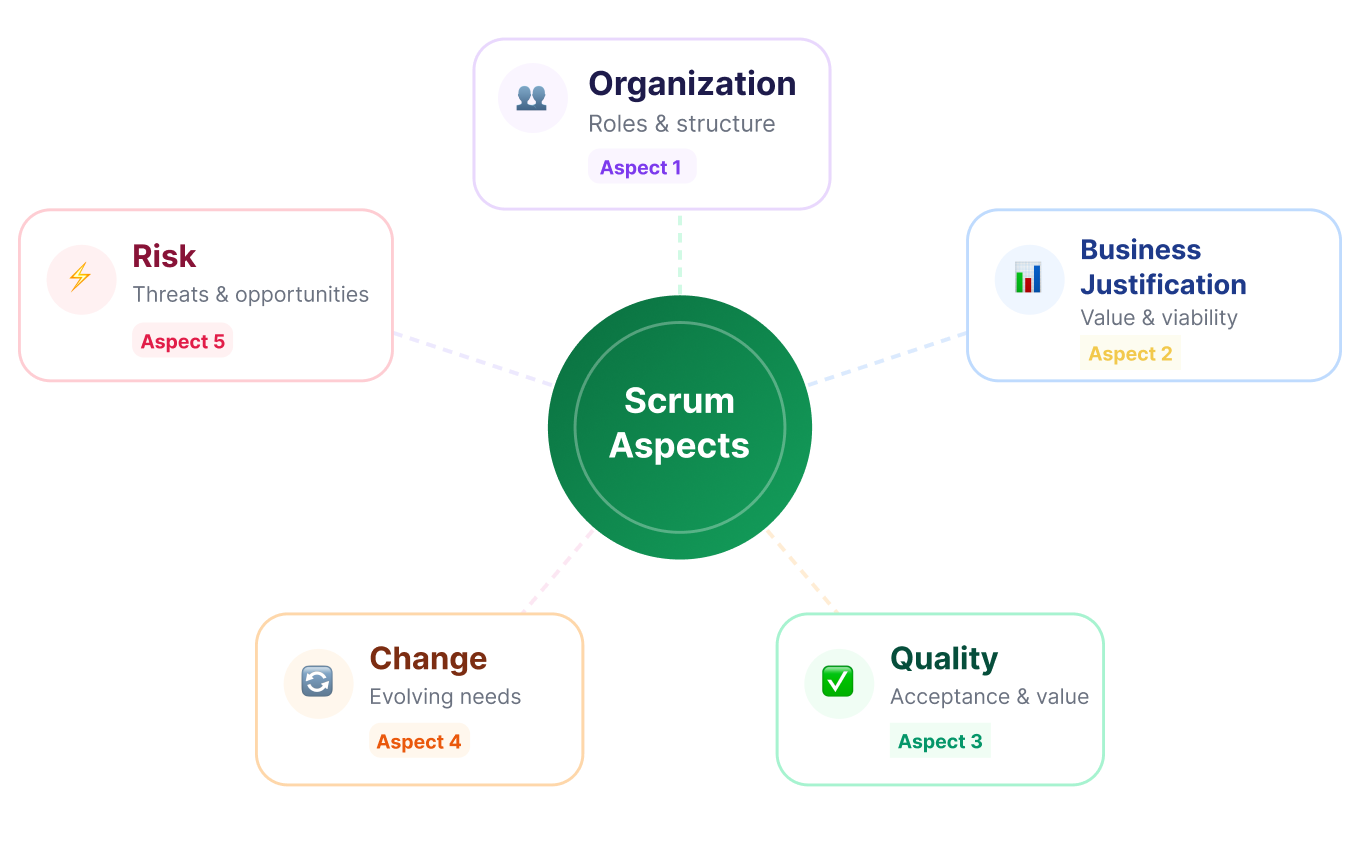
Scrum aspects represent the key areas that must be addressed and actively managed throughout a Scrum project. Taken together, they give teams a shared framework for aligning project structure, business value, quality standards, change tolerance, and risk response - establishing a solid foundation for consistent, successful delivery.
Organization
The organization aspect defines the people, roles, and structure needed to support effective Scrum delivery.
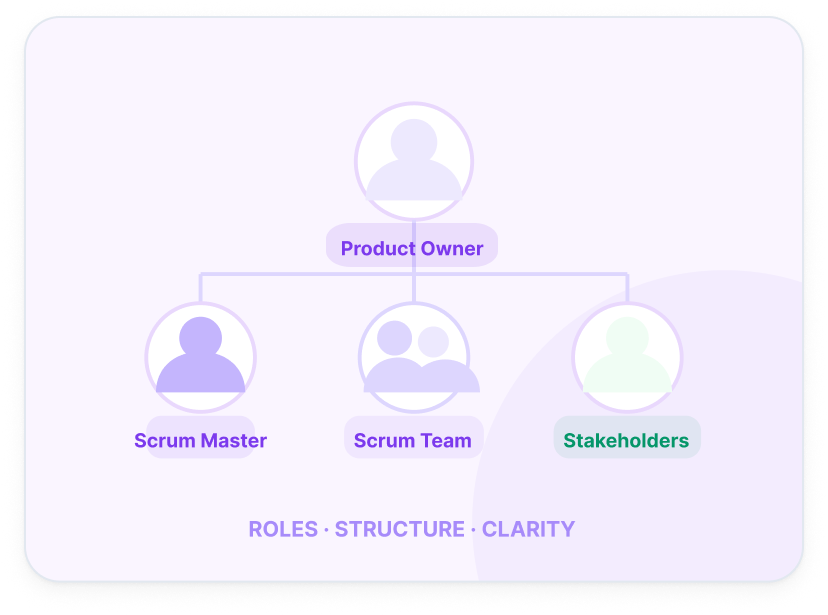
Clearly defined roles and responsibilities are fundamental to Scrum. This aspect addresses how a project is structured, including the composition of the Scrum Team and the distinction between core and non-core roles.
SCRUMstudy identifies three core roles: the Product Owner, who drives business value and represents the customer's perspective; the Scrum Master, who facilitates the process and clears obstacles for the team; and the Scrum Team, which estimates effort and produces the project deliverables.
Non-core roles - including business stakeholders, supporting services, vendors, and the optional Scrum Guidance Body - are also recognized. While they may not participate continuously, their involvement can have a meaningful impact on project outcomes.
 What it covers
- Core and non-core Scrum roles
- Clear responsibilities and accountability
- Team structure for projects, programs, and portfolios
 Why it matters
- Brings clarity to decision-making and delivery
- Ensures teams engage the right stakeholders
- Lays a stronger foundation for effective execution
Business Justification
Business Justification establishes why a project should be started and why ongoing investment in it remains worthwhile.
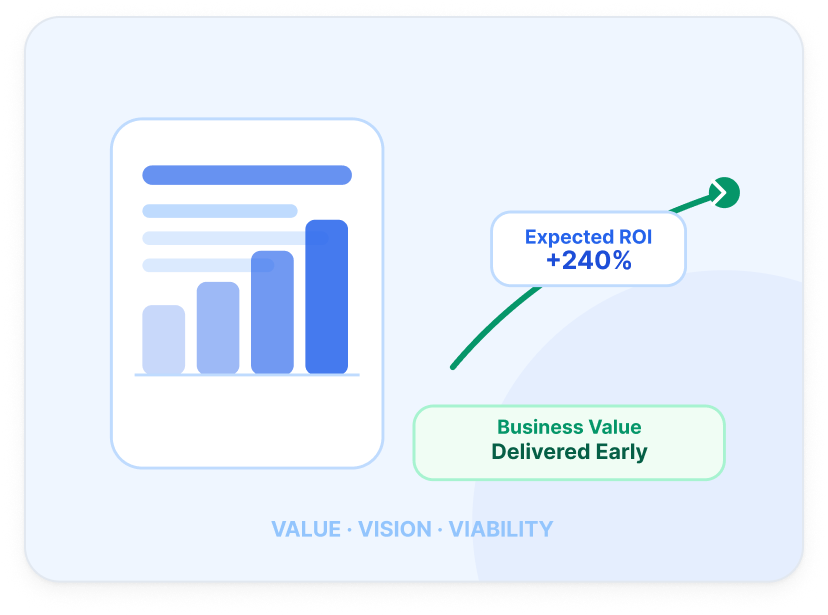
SCRUMstudy emphasizes that a sound business justification and a clear Project Vision Statement should be in place before a project gets underway. These elements help decision-makers evaluate whether the effort is worthwhile and give the Product Owner a basis for building a prioritized backlog.
In Scrum, business justification is directly connected to value-driven delivery. Because all projects carry some level of uncertainty, Scrum promotes early delivery of working results so stakeholders can assess value sooner, validate the direction, and reinvest with greater confidence.
Business justification is not a one-time exercise. It should be revisited throughout the project to confirm that the initiative remains relevant as priorities, constraints, and expectations shift.
 What it focuses on
- Confirms the project addresses a genuine need
- Expected business value and outcomes
- Continued relevance across the lifecycle
 Why it matters
- Guides smarter investment decisions
- Keeps work tied to business priorities
- Enables teams to deliver value early and often
Quality
In Scrum, quality means satisfying acceptance criteria and delivering the business value the customer expects.
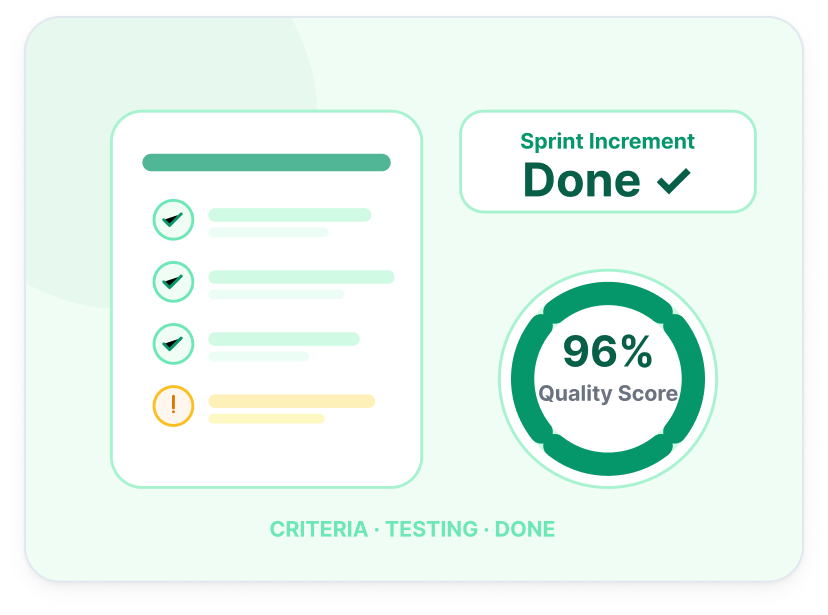
SCRUMstudy defines quality as the degree to which completed deliverables meet acceptance criteria and fulfill the business value the customer expects. Rather than treating quality as a final-stage concern, Scrum builds it into the process through continuous improvement.
Because work is delivered in increments across Sprints, defects and gaps are identified earlier in the process. Development, testing, and documentation are completed within the same Sprint, making quality an integral part of the work rather than a separate phase.
Ongoing dialogue between the Scrum Core Team and business stakeholders - combined with reviews of actual product increments - helps narrow the gap between what customers expect and what teams are delivering.
 What supports quality
- Acceptance criteria and stakeholder feedback
- Incremental delivery and repetitive testing
- Continuous backlog updates as needs evolve
 Why it matters
- Surfaces issues earlier in the lifecycle
- Embeds quality into every Sprint
- Strengthens alignment with customer expectations
Change
Scrum treats change as a natural part of project work and is built to welcome evolving requirements rather than resist them.
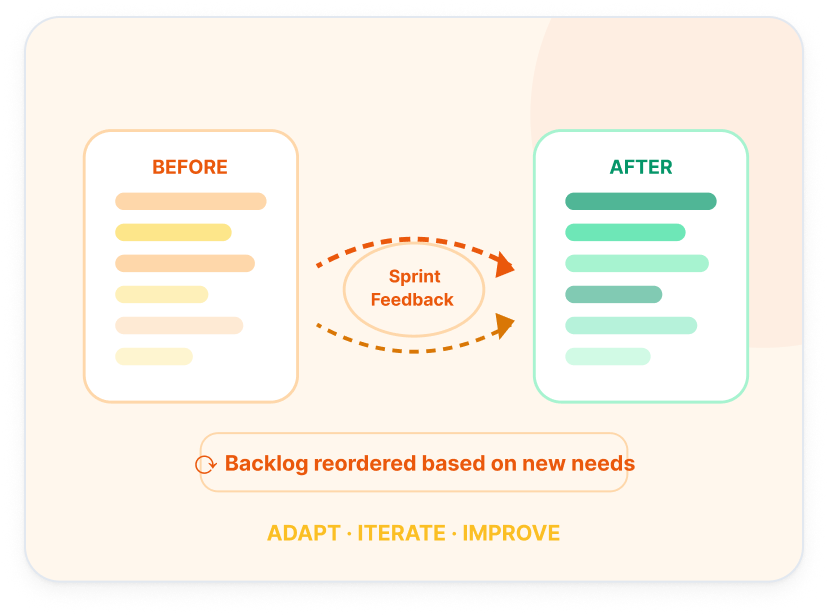
No project is immune to change, regardless of the methodology in use. SCRUMstudy makes clear that Scrum development processes are built to accommodate change, helping organizations capture the benefits that come with new information while limiting negative disruption.
Scrum recognizes that business stakeholders frequently refine their expectations over time, and that pinning down every requirement at project initiation is rarely realistic. Short, iterative Sprints allow teams to gather feedback regularly and course-correct before issues compound.
Rather than treating change as a problem to be controlled, Scrum treats it as expected. This approach fosters responsiveness, stronger stakeholder engagement, and a tighter fit between the final product and the evolving needs of the business.
 How Scrum supports change
- Short Sprints and frequent feedback loops
- Regular review of increments with stakeholders
- Backlog refinement as needs evolve
 Why it matters
- Lowers the cost of late discovery
- Keeps the product aligned with expectations
- Lets teams adapt without losing momentum
Risk
Risk in Scrum encompasses both threats and opportunities, and should be managed proactively at every stage of the project.
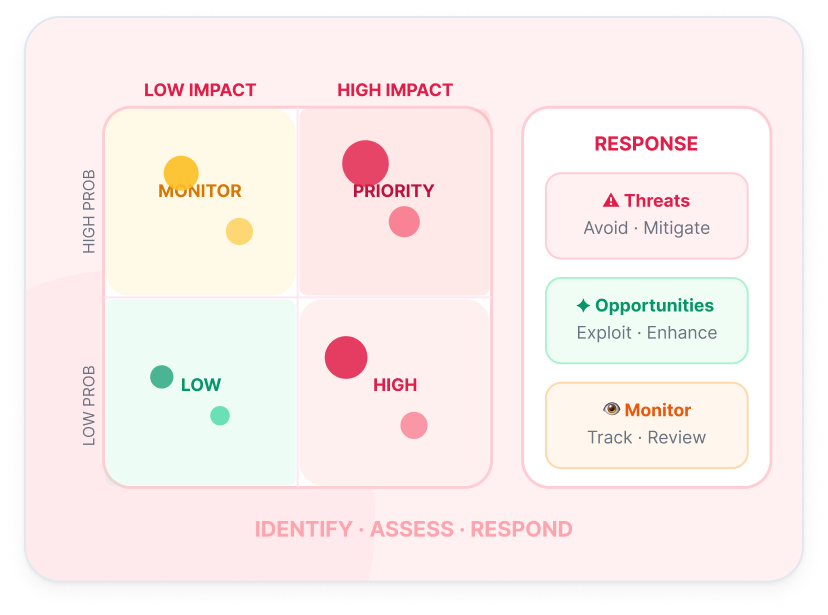
SCRUMstudy defines risk as an uncertain event or condition that can affect project objectives - either positively or negatively. Positive risks represent opportunities to be leveraged; negative risks are threats to be mitigated. In Scrum, risk management is an ongoing activity that starts early and runs throughout the project.
Risks are evaluated based on two key factors: the likelihood of occurrence and the potential impact. Those with high probability and high impact demand more immediate attention than risks that are less likely or less consequential.
Scrum's incremental delivery model helps expose risks sooner. Smaller units of work, faster feedback cycles, and regular Sprint reviews give teams the opportunity to respond to issues before they escalate.
 What risk management involves
- Identifying threats and opportunities
- Assessing probability and impact
- Planning responses and monitoring continuously
 Why it matters
- Promotes proactive decision-making
- Enables teams to act before risks grow
- Strengthens confidence in project outcomes
Deepen your understanding of Scrum with GetCertNow
Understanding the Scrum aspects gives professionals a clearer picture of how Scrum projects are structured, governed, and continuously improved in real-world settings. Explore GetCertNow's Scrum learning options to advance both your practical knowledge and your certification readiness.
