

What is Scrum?
Scrum is a widely adopted Agile framework that enables teams to work in focused cycles, respond to change with confidence, and deliver value on a consistent basis. It is built to strengthen collaboration, transparency, and momentum on complex projects.
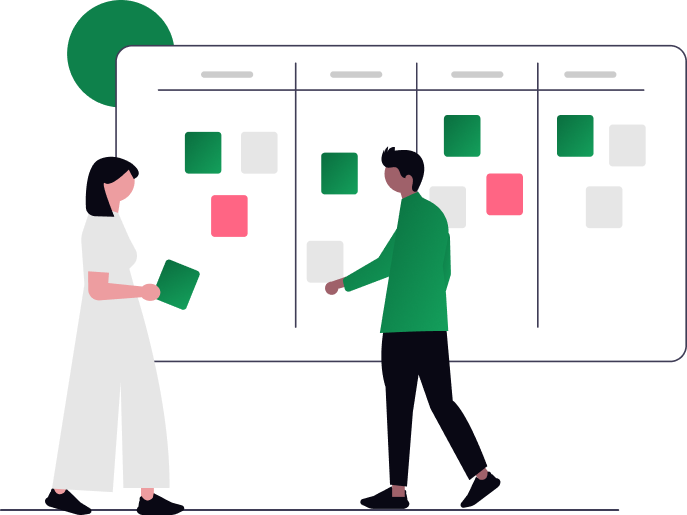
Scrum in brief
Scrum enables teams to break large or uncertain work into smaller, manageable increments. Rather than holding results until a project concludes, Scrum keeps teams in a continuous loop of planning, building, reviewing, and improving.

Why Teams Use Scrum
Today's projects demand the ability to handle changing requirements, shifting priorities, and pressure for faster delivery. Scrum gives teams a practical structure to meet these demands while staying focused on business value.

What Makes Scrum Different
Rather than depending on exhaustive upfront planning, Scrum relies on iterative decision-making. Teams tackle the highest-priority work first, check in on progress regularly, and refine their approach based on real stakeholder input.
Three ideas How Scrum works
Scrum is straightforward in structure, yet powerful in practice. Its impact stems from a few core ideas that define how teams operate and deliver together.

Iterative delivery
Work is completed in short cycles called Sprints, giving teams the ability to release usable increments on a regular cadence rather than waiting for a single final launch.
Cross-functional teams
Scrum teams are self-organizing and empowered. They combine the skills required to take work from concept through to completed delivery.

Inspect and adapt
Regular progress reviews, stakeholder input, and a commitment to ongoing improvement allow teams to course-correct quickly and stay on track.
How Scrum works
SCRUMstudy describes Scrum as a framework centered on short, focused work cycles and consistent team collaboration. A typical flow looks like this.

Vision and priorities
Project goals are defined and key requirements are organized into a prioritized product backlog.

Sprint planning
The team pulls high-priority backlog items and aligns on the scope of work to be completed during the Sprint.

Sprint execution
The team works together throughout the Sprint to produce a potentially shippable increment.

Daily review
Brief daily check-ins keep the team aligned on what has been done, what comes next, and any blockers in the way.

Review and improve
Once the Sprint ends, the team evaluates deliverables, collects stakeholder feedback, and commits to targeted improvements.
Online Proctored Exams
Take exams from home, globally
Key Scrum roles
Scrum assigns clear responsibilities to keep teams focused, aligned, and moving toward delivery.

Product Owner
Value and priorities
Owns the product backlog and ensures the team is consistently focused on the work that delivers the greatest value.

Scrum Master
Process and facilitation
Guides the team in applying Scrum practices effectively, clears blockers, and champions a culture of continuous improvement.

Scrum Team
Delivery
Works together to complete Sprint tasks and produce product increments that satisfy agreed-upon requirements.
Why Scrum matters for modern teams
Scrum is trusted across industries because it brings together speed, structure, and adaptability in one framework. It keeps organizations moving forward even when project complexity and uncertainty are high.
- Faster delivery of high-priority features
- Clearer visibility into progress and what comes next
- Stakeholder and customer feedback captured earlier
- Lower risk of investing effort in the wrong direction
- A defined structure that supports planning and teamwork
- Shorter cycles that sharpen focus and reinforce accountability
- Built-in checkpoints to reflect, learn, and improve
- Greater ownership through self-directed work
Learn Scrum with GetCertNow
GetCertNow helps professionals develop a solid understanding of Scrum and build the confidence to apply it in real projects. Whether you are new to Scrum or working toward certification, structured training gives you the clarity to progress faster.

Clear foundation
Build a strong grasp of Scrum concepts, terminology, roles, events, and artifacts through structured learning.
Practical perspective
Explore how Scrum is applied across real project and product environments, going well beyond theory.

Certification pathway
Advance from foundational to expert-level knowledge with training aligned to recognized Scrum certifications.
Ready to explore Scrum further?
Use this page as your starting point for the Why Scrum section, then guide learners into topics such as Scrum in 6 Minutes, Scrum Principles, Scrum Aspects, Scrum Phases and Processes, and Scrum certifications.
