

Scrum for
Large Projects
Scrum is widely known for powering small, focused teams — but it's built to scale. When multiple Scrum Teams pursue a shared goal, the need for structured coordination, cross-team collaboration, and unified release planning becomes critical to project success.

Scrum Teams are a common sign of larger-scale project delivery
Product Owners and Scrum Masters are often needed across teams
Planning, cross-team coordination, and release visibility are non-negotiable
Large Scrum Projects at a Glance
Scaling Scrum doesn't change the core framework — it adds coordination layers that help multiple teams stay aligned
and move together toward shared release outcomes.
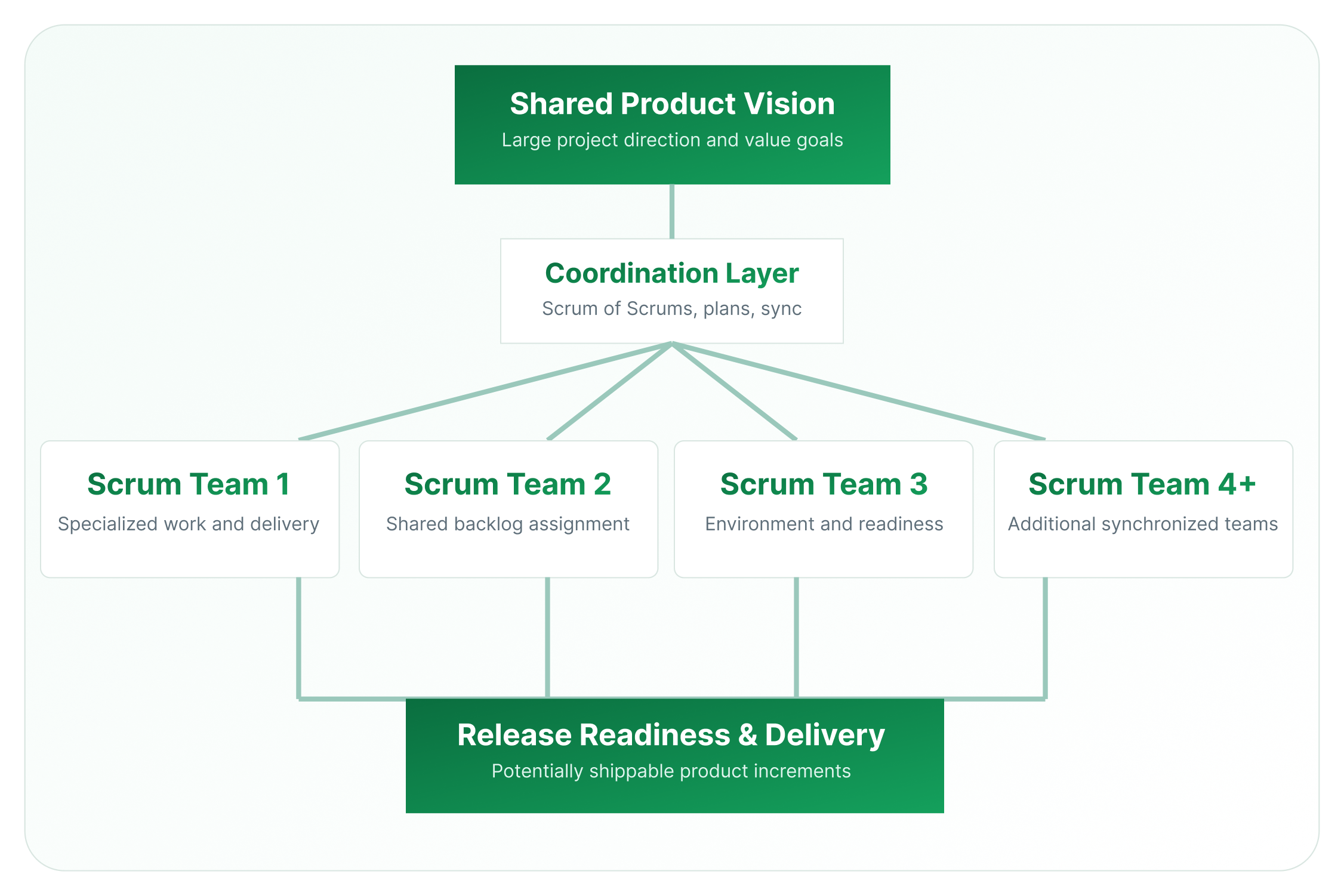
This visual illustrates how multiple Scrum Teams maintain alignment through shared planning, ongoing coordination, and collective release readiness.
When Scrum scales for larger projects
Scrum is fully capable of supporting large, complex initiatives by extending coordination across multiple teams. As scope expands, projects often involve several Scrum Teams working in parallel — along with additional Product Owners, Scrum Masters, and shared planning requirements.

Key indicators of a large Scrum project
- Multiple Scrum Teams contributing to a single shared outcome
- More than one Product Owner or Scrum Master engaged
- Dependencies spanning teams, environments, or deliverables
- Increased demand for synchronization and release coordination

How the project evolves as it grows
- Communication becomes more deliberate and structured
- Planning operates at both the team and project level
- Shared resources and environments require active coordination
- Release readiness demands broader visibility across all teams
What large Scrum projects need beyond standard Scrum
The core Scrum framework holds at scale, but larger projects demand additional planning, coordination, and visibility to keep every team moving in the same direction.

A defined project structure
Large projects require clear team boundaries, aligned roles, and well-defined ownership across the full initiative.
Cross-team planning
Teams must coordinate backlog ownership, shared priorities, and dependencies that cut across more than one team.

Resource and environment coordination
Shared resources, specialized expertise, and common environments need deliberate planning so teams can deliver without unnecessary delays.

Release readiness visibility
A unified view of readiness gives all teams clarity on what needs to be completed before a release can move forward.
How coordination works across teams
Large Scrum projects thrive when teams stay connected through consistent communication, joint planning, and shared visibility into progress and blockers at every level.
Common coordination mechanisms used
- Scrum of Scrums meetings
- Cross-team communication plans
- Shared backlog and dependency tracking
- Release planning and readiness reviews
Why strong coordination matters
- Prevents teams from operating in silos
- Strengthens alignment across all deliverables
- Minimizes blockers and late-breaking surprises
- Drives more reliable large-scale delivery outcomes
