

Scrum Phases &
Processes Overview
See how Scrum projects advance from initial vision to final release across five structured phases and nineteen defined processes.
5
Project Phases
19
Scrum Processes
100%
SBOK Aligned
3
Core Roles
Five phases. One seamless
path to delivery.
Each phase addresses a specific stage of project flow — from articulating a vision to shipping value and capturing what was learned.
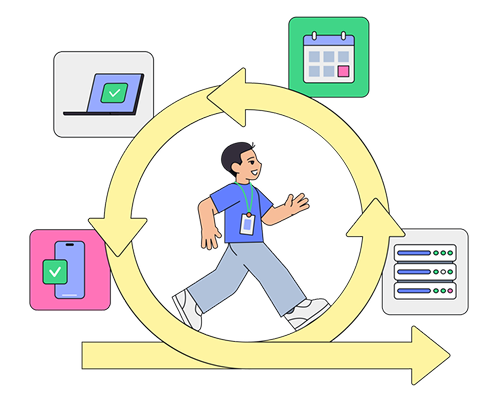
The Scrum lifecycle spans five interconnected phases: Initiate, Plan and Estimate, Implement, Review and Retrospect, and Release. Together, they trace the full arc of a Scrum project — from establishing vision and planning work, through delivery and validation, to continuous improvement and final release.
Initiate
The Initiate phase establishes project direction, defines key roles, assembles the team, and lays the groundwork for the early backlog and release outlook.
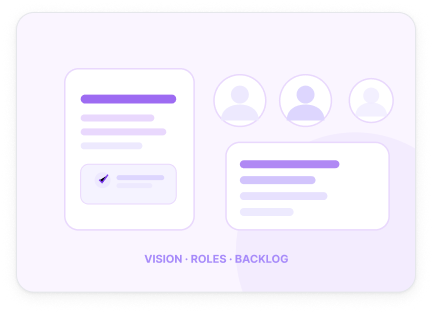
The Initiate phase covers six key processes. These establish the project vision, identify the Scrum Master and stakeholders, assemble the Scrum Team, develop Epics, create the Prioritized Product Backlog, and conduct Release Planning.
This phase gives the project its foundational structure — helping teams understand why the project exists, who is involved, what the major work items are, and what the release trajectory looks like before Sprint-level planning begins.
 Main Focus
- Define the project vision
- Identify roles and stakeholders
- Establish early backlog direction
 Why It Matters
- Builds alignment before execution begins
- Gives the team clarity on value and scope
- Sets up stronger planning in later phases
PROCESSES IN THIS PHASE
Plan & Estimate
Converts backlog priorities into Sprint-ready items, effort estimates, team commitments, and defined tasks — bridging vision and hands-on execution.
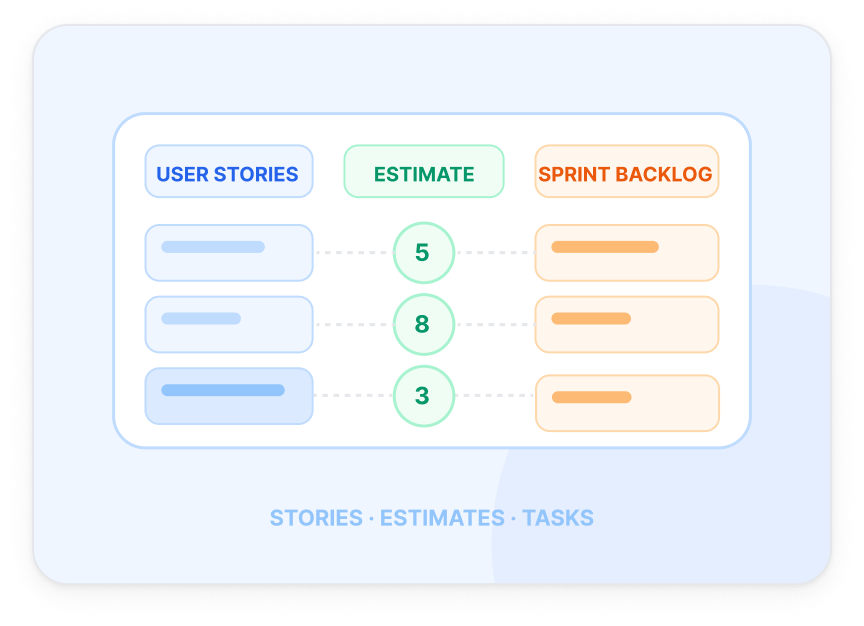
This phase takes the team from high-level backlog thinking to Sprint-ready work. It covers breaking Epics into User Stories, estimating effort, deciding what the team can commit to, and organizing that work into concrete tasks.
It serves as the critical link between vision and execution — turning intent into a practical, actionable plan for the upcoming Sprint.
 Main Focus
- Develop and refine Sprint-ready work
- Estimate effort at story and task level
- Build a realistic Sprint Backlog
 Why It Matters
- Sharpens delivery clarity and team alignment
- Enables realistic, grounded commitment
- Gets teams ready for focused implementation
PROCESSES IN THIS PHASE
Implement
The Sprint plan moves into active development. The team builds the product increment, synchronizes daily, and keeps the backlog current as the Sprint progresses.
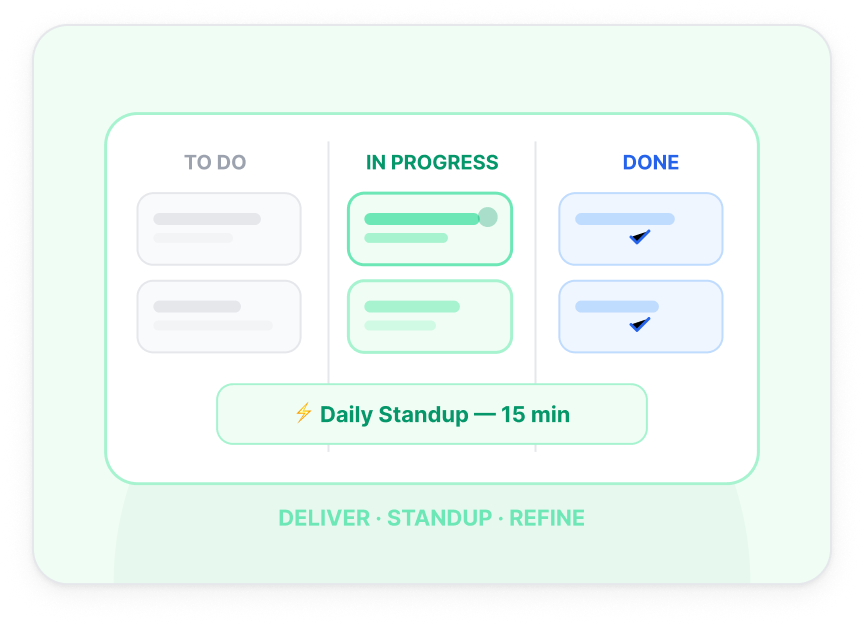
This phase is where planned work becomes tangible output. The team builds the product increment, synchronizes daily, and refines the backlog at regular intervals to keep the broader product direction aligned with new learning and stakeholder needs.
Scrum stays adaptive throughout implementation. Development does not mean the team stops learning — they continue to inspect, coordinate, and adjust as the Sprint unfolds.
 Main Focus
- Build Sprint deliverables
- Synchronize through Daily Standups
- Continuously refine the backlog
 Why It Matters
- Keeps execution transparent and on track
- Enables fast coordination within the team
- Lets learning shape upcoming priorities
PROCESSES IN THIS PHASE
Review & Retrospect
Dedicated to evaluating Sprint output, validating completed work, and surfacing concrete improvements to carry into future Sprints.
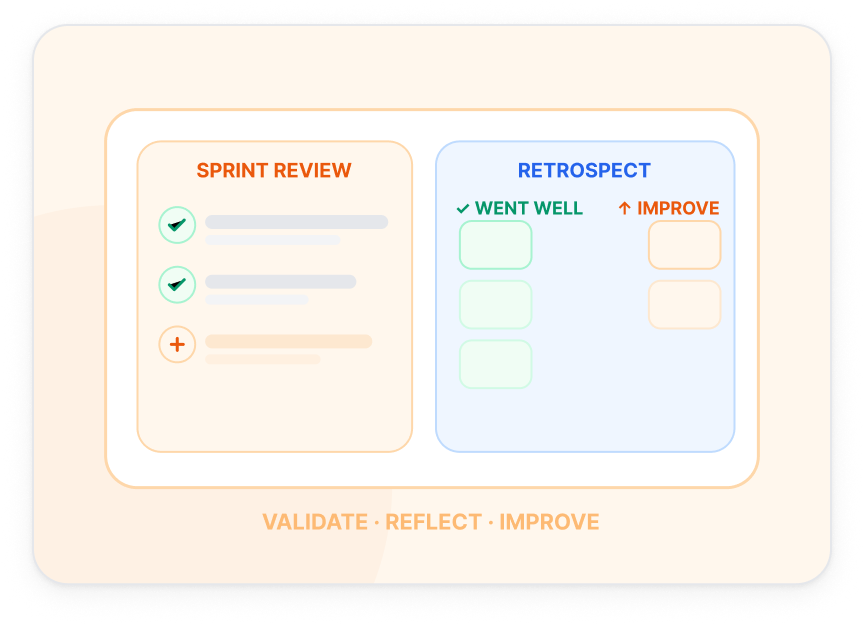
This phase addresses both the product and the process. Sprint output is demonstrated and validated, while the team takes stock of what went well, what fell short, and what changes should be made heading into the next cycle.
It sits at the heart of Scrum's inspect-and-adapt mindset — directly linking delivery feedback to meaningful process improvement.
 Main Focus
- Demonstrate and validate the Sprint increment
- Assess team practices and working methods
- Drive improvements into future Sprints
 Why It Matters
- Confirms deliverables meet stakeholder expectations
- Establishes consistent improvement cycles
- Builds cumulative learning across Sprints
PROCESSES IN THIS PHASE
Release
The Release phase centers on delivering accepted work to the customer and documenting lessons learned from the complete project cycle.

This phase is about getting accepted deliverables into the hands of the customer and formally reflecting on the release as a whole. It ensures that value is not only produced but actually delivered — and that lessons learned are recorded and acted on.
Release reinforces that Scrum extends beyond internal team rhythm. It is about putting completed work in front of users and using that experience to raise the quality of future delivery.
 Main Focus
- Deliver accepted work to the customer
- Document release-level insights
- Complete the delivery loop
 Why It Matters
- Converts accepted work into realized value
- Drives organizational learning
- Raises the bar for future releases and projects
PROCESSES IN THIS PHASE
Build your Scrum expertise with GetCertNow
Understanding the Scrum phases and processes gives professionals a clear picture of how projects move forward in a structured, value-driven way. Explore GetCertNow's learning options to deepen your practical knowledge and strengthen your certification readiness.
